

MWASFA TECH · Define. Build. Verify.
Specify once. Agents build exactly what you approved
Structured specs, immutable approved versions and traceability from requirement to commit. The agent invents nothing.
- 14 days free
- No card required
- Arabic first
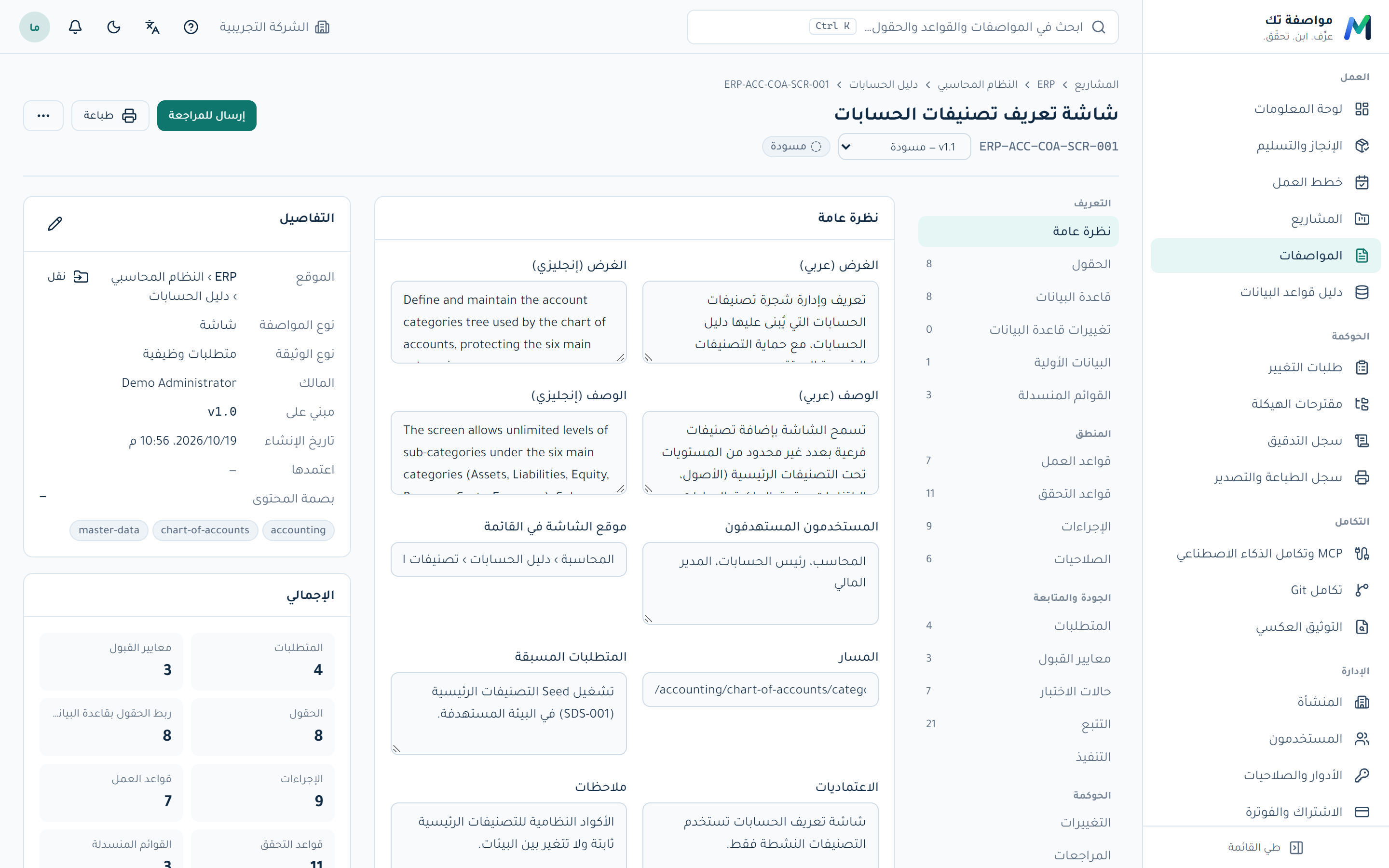
In 80 seconds
Meet MWASFA TECH
How a specification moves from analysis to approval, then to code a coding agent builds with nothing extra.
Problem and answer
Scattered specs cost more than you think
One approved version
Instead of Word files and chat threads nobody can trust: every spec is structured data with versions, and the approved one never changes.
One shared reading
Instead of developers and testers working from different readings: requirements, rules, fields and test cases with stable codes everyone refers to.
Agents that invent nothing
AI agents are fast but add what nobody asked for. Here the agent reads approved content only over MCP and asks for the spec code first.
Know what was really built
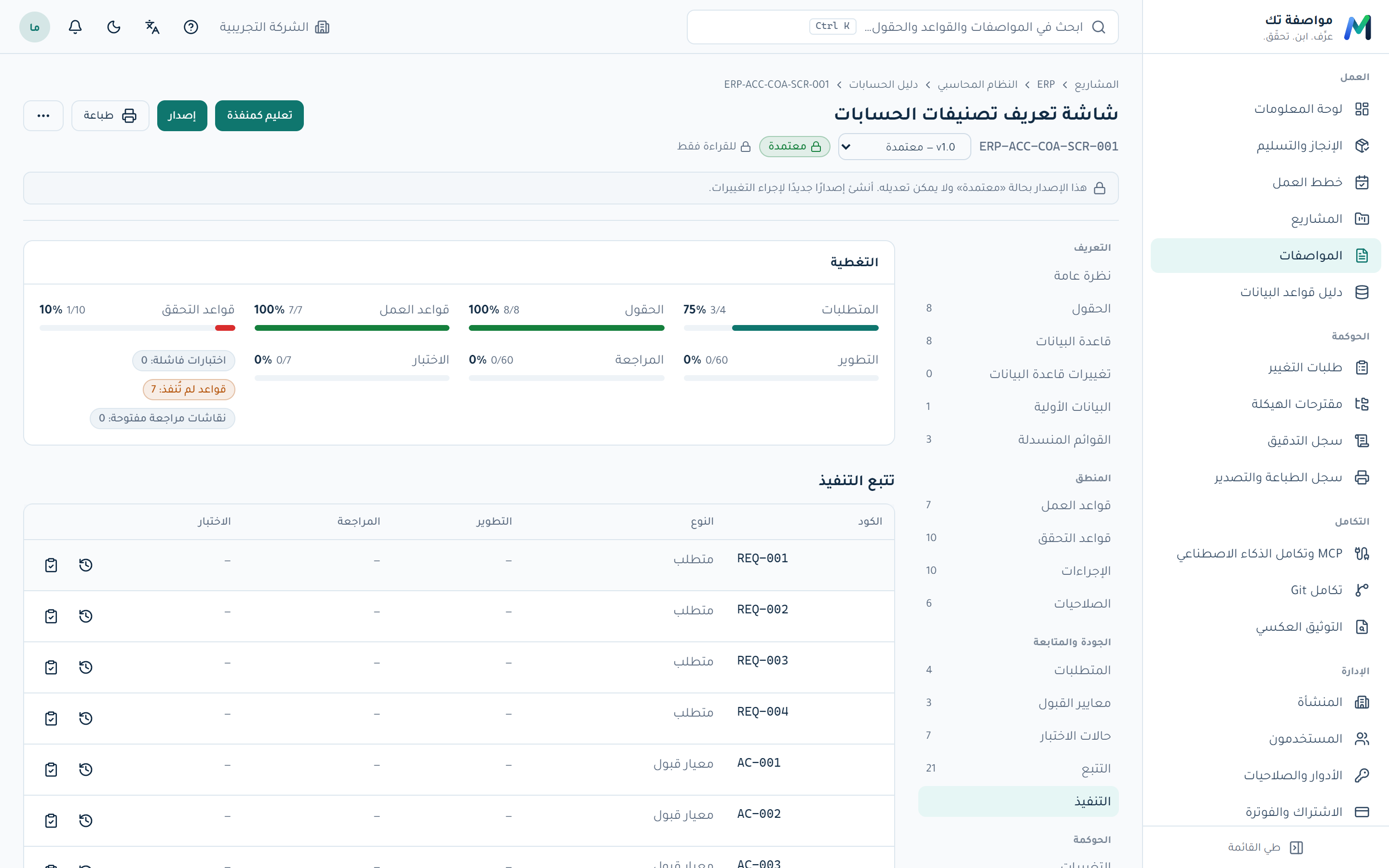
Implementation and test status for every element, linked to commits.
For the CEO
From a black box to a glass box
How leadership sees what is really being built in its systems, from approved requirement to delivery.
Specs as data
Everything about the system, in one place
Screens, APIs, reports, databases and integrations, documented as structured elements with stable codes rather than as a text document.
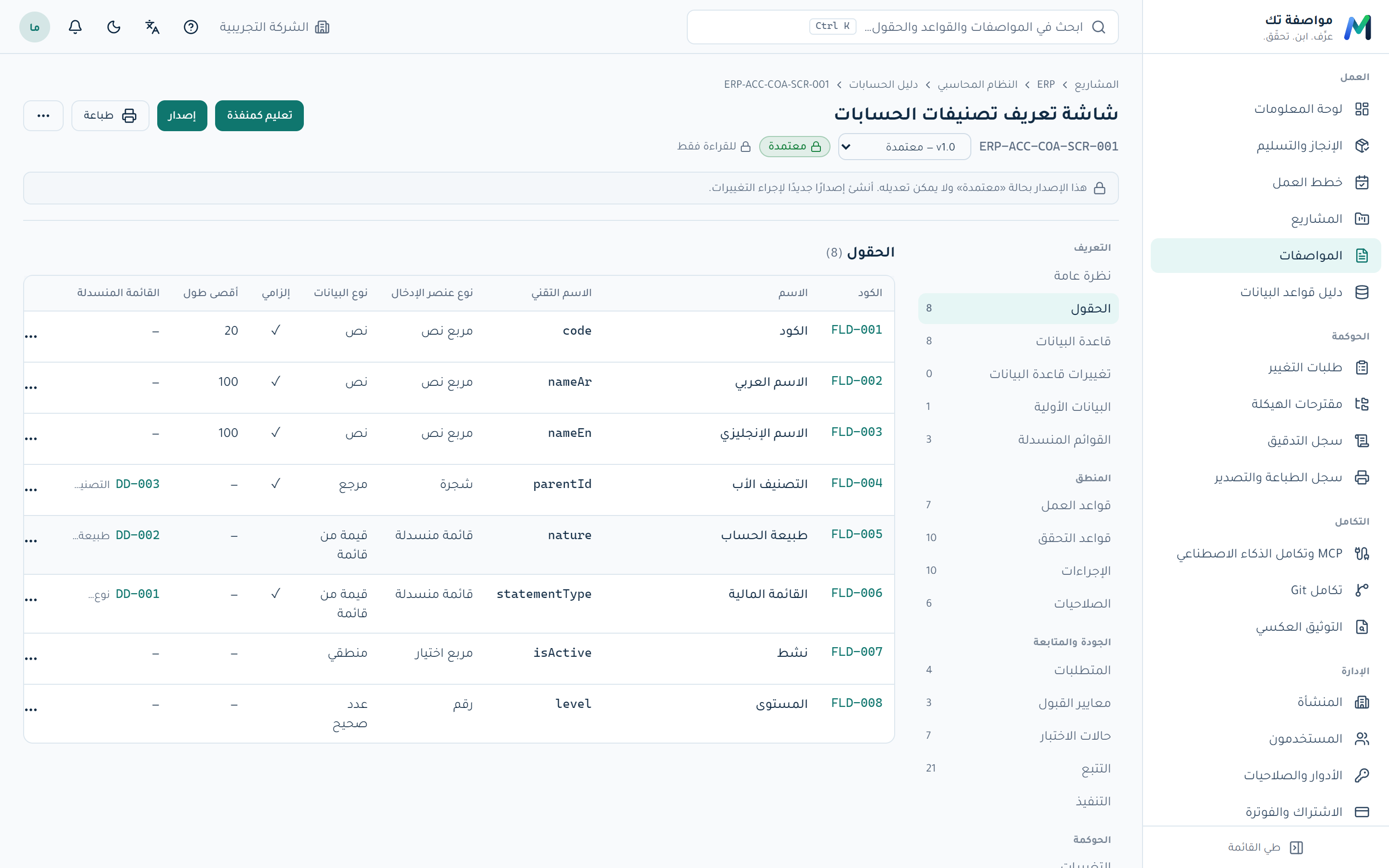
- Requirements, fields, business rules and validation
- Actions, permissions and acceptance criteria
- Test cases linked to every element
- Database catalog: tables, columns and relationships
Features
One platform from analysis to release
Specs as data, not documents
Requirements, fields, business rules, validation, actions, permissions, acceptance criteria and test cases.
Versions nobody can tamper with
Approved versions are locked with a SHA-256 fingerprint; any change creates a new version with an element-level diff.
A clear approval workflow
Analyst, reviewer, approver, developer, tester, release, with review threads on every element.
Traceability to the commit
Connect your repository: every commit that cites a spec code updates the implementation status.
AI-assisted drafts
The assistant suggests; only people accept and approve. Every suggestion is clearly badged.
Database catalog
Tables, columns and relationships; what specs propose shows as "Proposed" until it is built.
How it works
From idea to code without guesswork
- 1
Specify
Analysts write the spec, alone or with AI help, with stable element codes.
- 2
Review and approve
Review and approval happen in the platform; approved versions are locked.
- 3
Build with agents
Coding agents connect over MCP and build only what was approved.
- 4
Trace
Status of every requirement, rule and test, live until release.
Coding agents
Coding agents build what was approved, nothing more
Give Claude Code, Codex or Cursor the bootstrap prompt and the rules file, and let MWASFA TECH set the boundaries.
- Reads approved versions only; drafts are out of reach.
- General requests get the matching specs and a request for the code.
- Gaps reach the analyst as change requests, not as guesses.
- Agent keys are bound to one organization, project, scopes and expiry.
Security
Built for enterprise data
Full tenant isolation
In the application and the database; the organization is always set by the server.
Fine-grained permissions
Roles scoped to organization, project and module.
Complete audit log
Every change, transition and approval with who, where and when.
Arabic first
A full Arabic interface with English, and billing in SAR.
In English
A tour of the platform's features
A visual tour of MWASFA TECH's key features, in the English interface.
Inside the platform
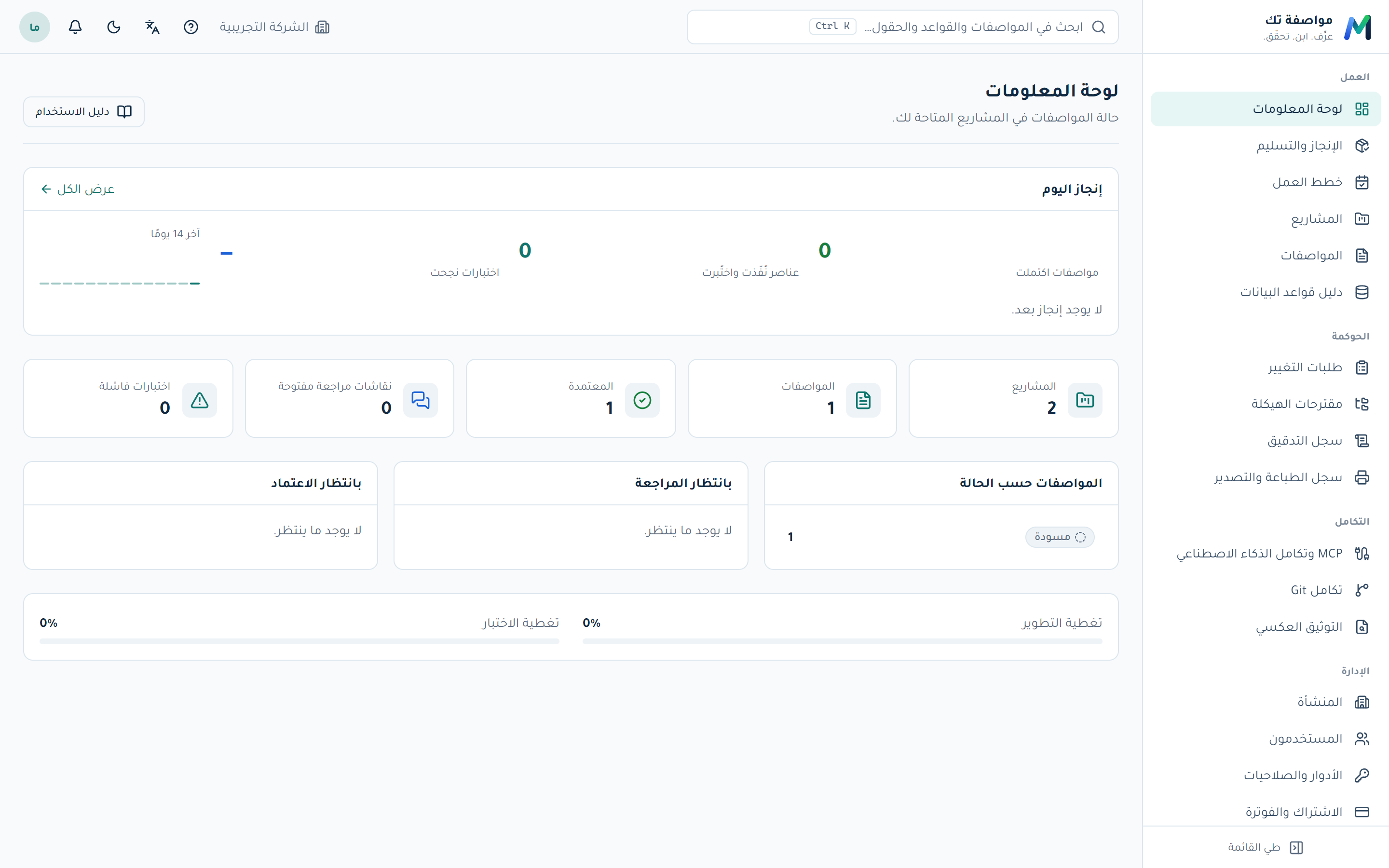
Dashboard Specification overview 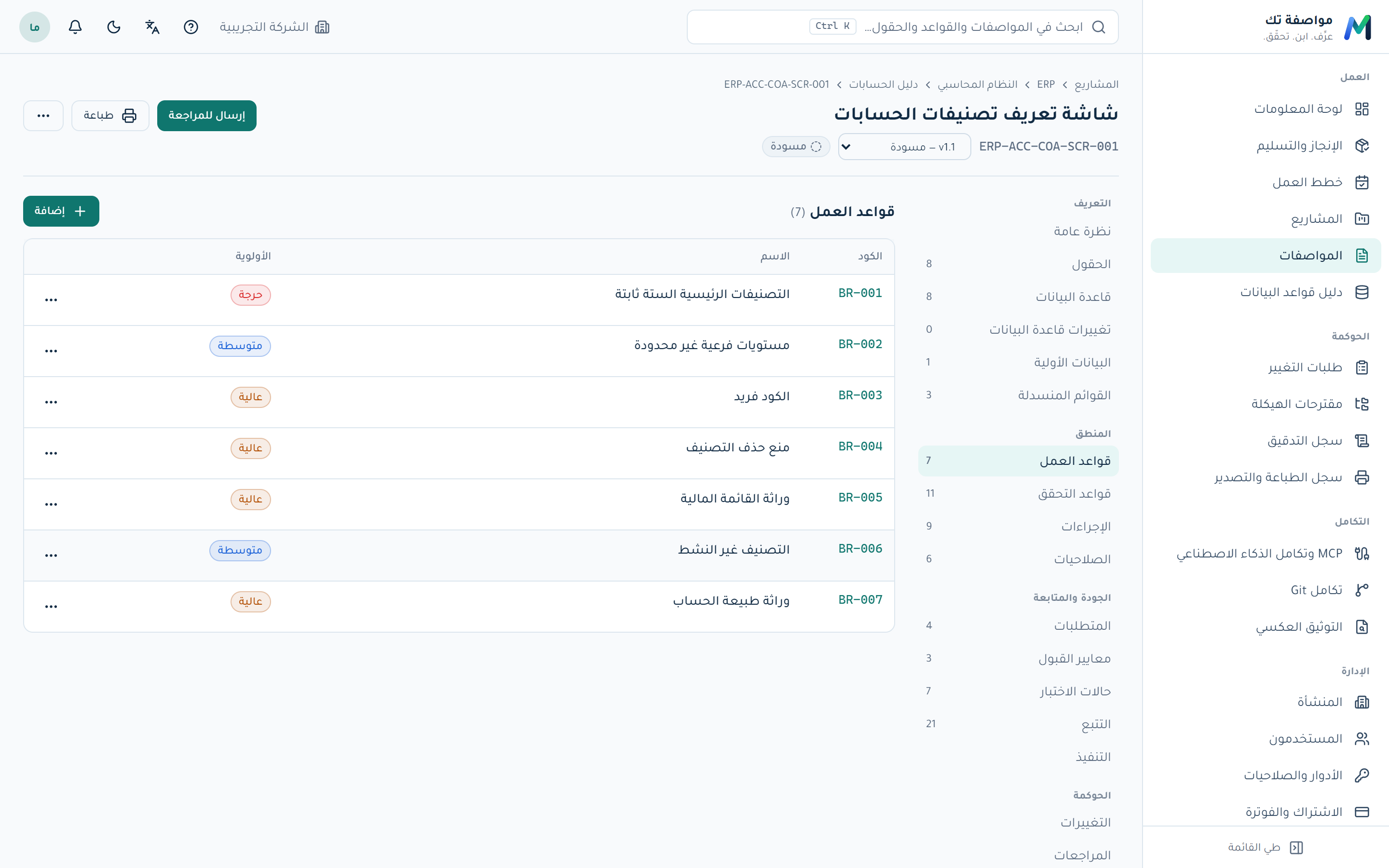
Business rules 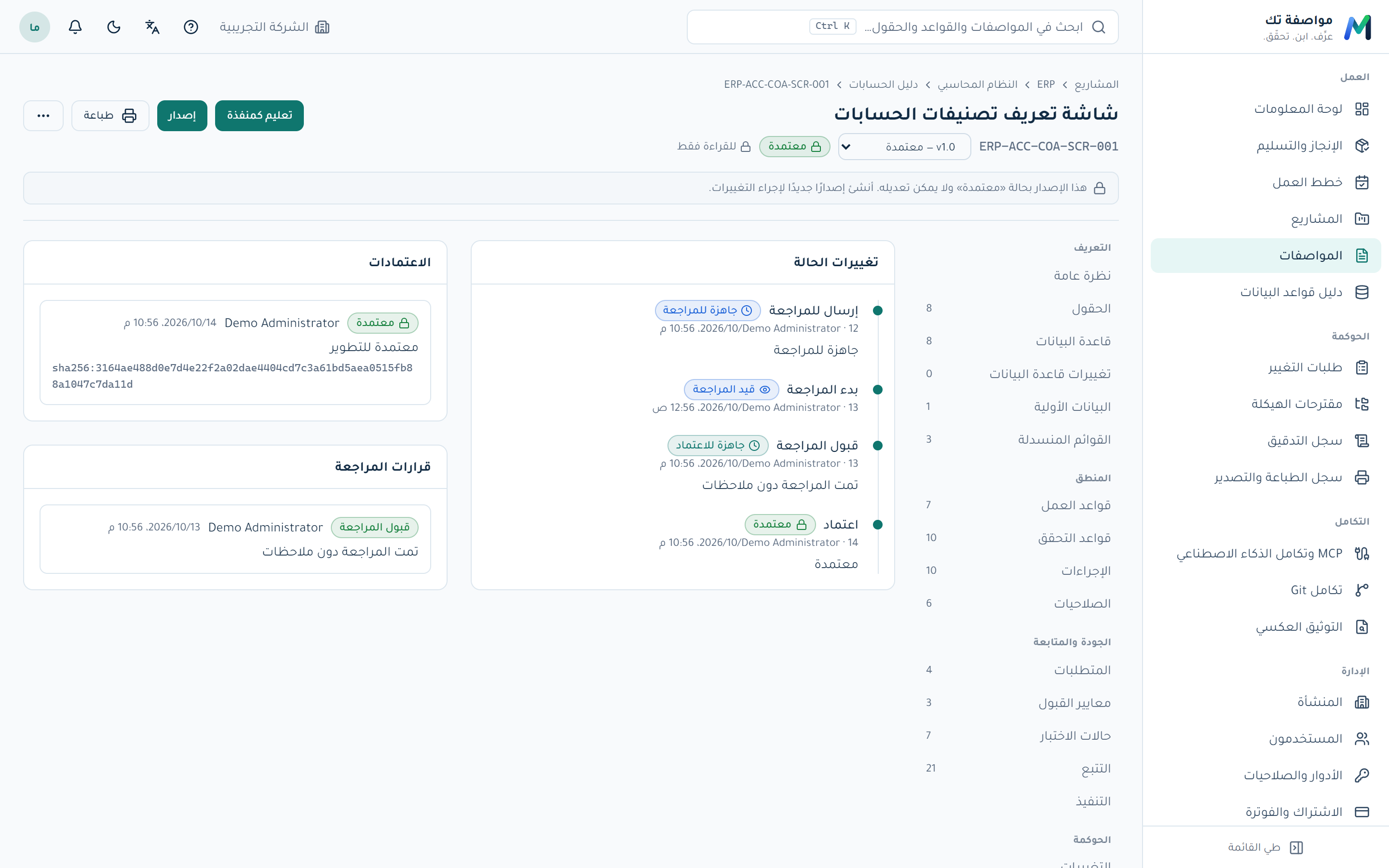
Approvals 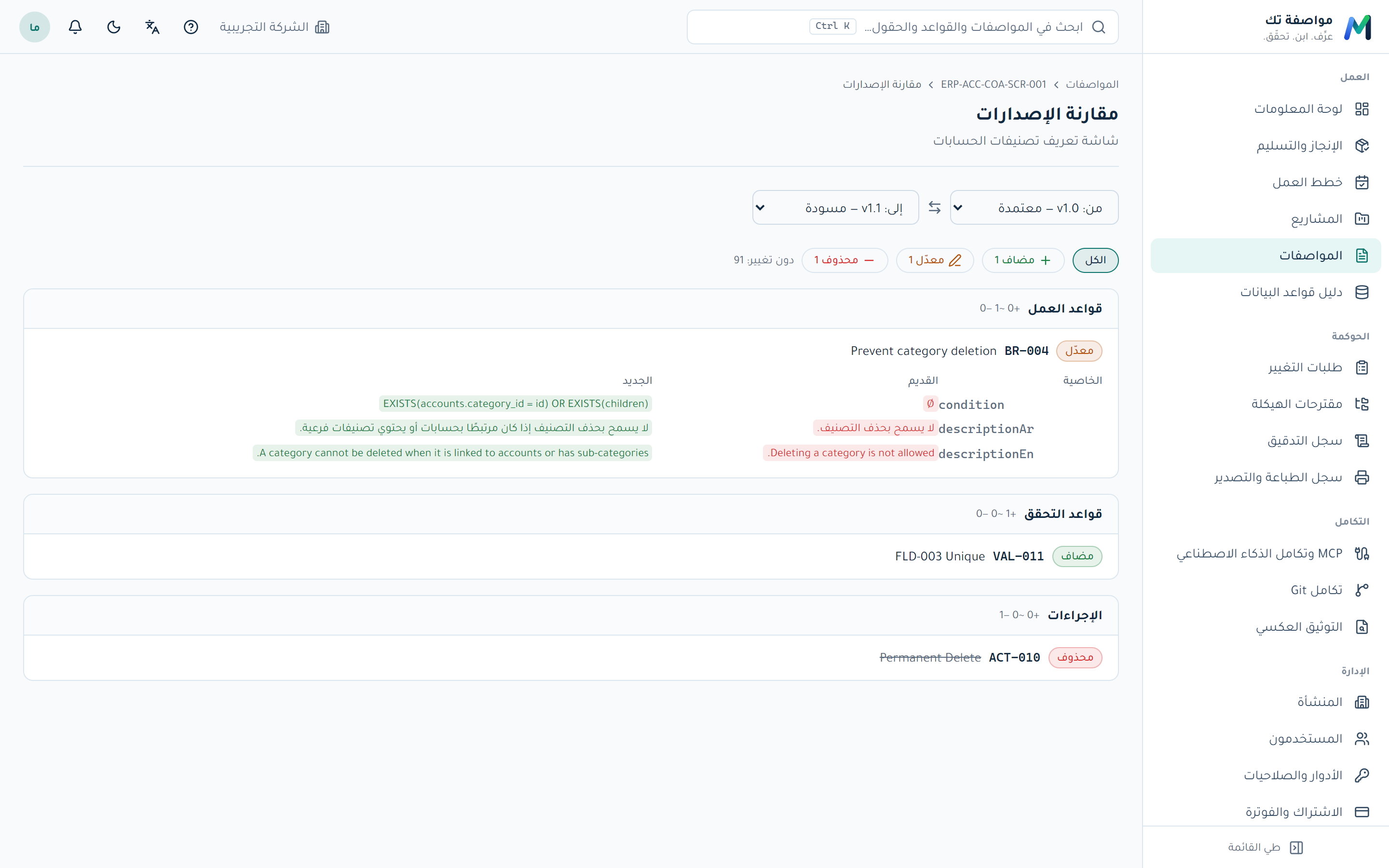
Version comparison 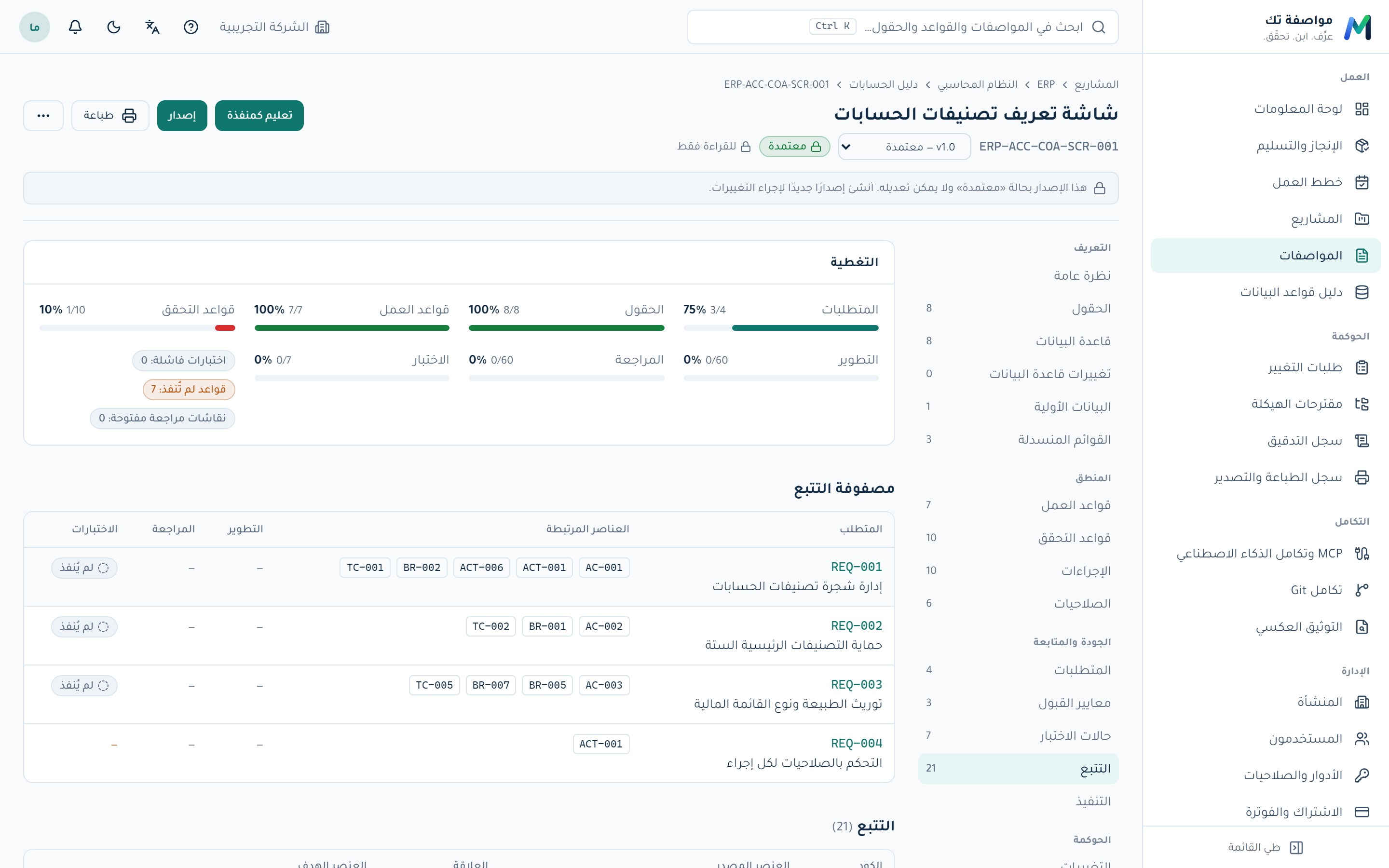
Traceability 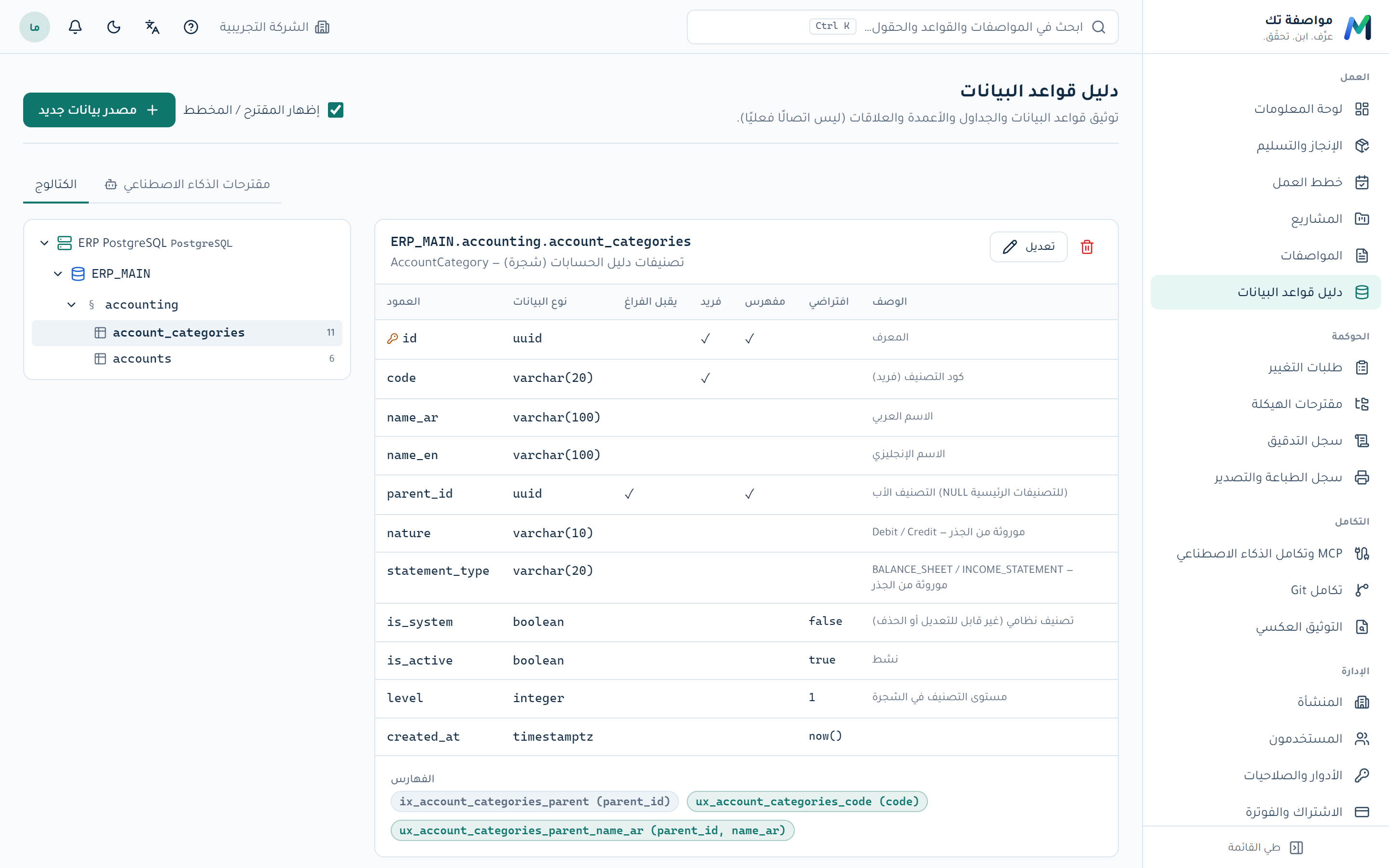
Database catalog 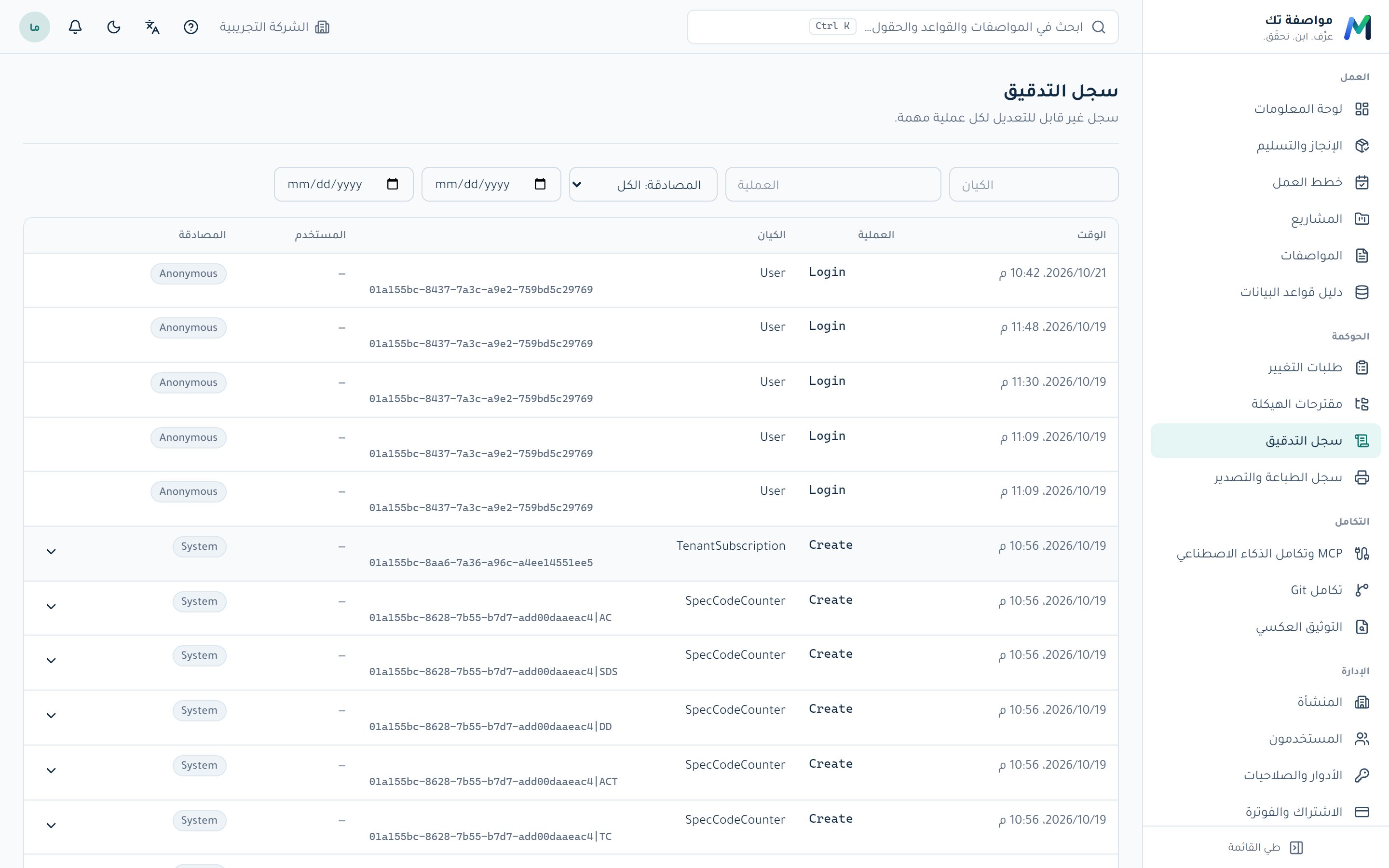
Audit log